 ChatGPT SEO
 Perplexity SEO
 Gemini SEO
11 best SaaS SEO agencies to grow ARR in 2026
We ranked 11 SaaS SEO agencies on verified results, Clutch reviews, AI search and price.

Loopex Digital is a specialist SEO and AI SEO agency serving ecommerce, SaaS and B2B companies. We create custom SEO and AEO strategies that turn search into a lead generation channel. We prioritize the searches your potential customers make when comparing products, choosing providers and preparing to buy.
★★★★★ 5.0 Clutch · Read reviewsHow search can connect customers with your business


A focused search team, clear priorities and visibility into the work on your account.
$1.2B in client revenue generated through SEO and AI search. Across our client campaigns, Loopex Digital has generated a lifetime total of $1.2 billion in revenue attributable to our SEO and AI answer engine optimization work.
 ↗ +705% traffic
Healthcare · Link outreach to relevant health and wellness publications.
 Workyard
↗ +1,839% organic clicks
Workyard
↗ +1,839% organic clicks
B2B SaaS · Relevant software links and research-led digital PR.
 Q for Quinn
↗ +728% traffic
Q for Quinn
↗ +728% traffic
Ecommerce · Expert-reviewed content, collection-page improvements and link building.
 Functionize
↗ +75% organic clicks
Functionize
↗ +75% organic clicks
SaaS · Expert content, internal linking and outreach for a software testing platform.
↗ +5,340% traffic
Consumer software · SEO campaign for a parental control app.
 OvoControl
↗ +784% traffic
OvoControl
↗ +784% traffic
Pest control · Specialist guides, technical improvements and relevant links.
Specialist services for organic search and visibility in AI-generated answers.
When buyers ask AI tools to compare providers, your brand may be missing from LLM results. With our internally built software, we examine each query and create a strategy for you to appear in those results.
Our AI SEO work combines citation research, content improvements to match related queries, technical reviews and visibility tracking across ChatGPT, Perplexity, Gemini and Google AI Overviews.
We research the sources cited for relevant buyer queries and pitch them to include our clients.
We identify the most common buyer queries and answer them through your content.
We review crawl access, internal links, site structure and accurate structured data to help search systems access and understand your content.
Our internally built software tracks your performance on your target queries, so we can optimize your strategy.
We research your market, prioritize commercially relevant topics and create content around the questions your customers ask most. We review all your current pages and optimize them for current market needs.
We identify the technical issues that can stop LLMs and search engines from reading your website's content correctly. For this, we use internally built scrapers that check more than 200 technical parameters.
We research relevant websites, contact publishers and report the links secured for your campaign. Each prospect is reviewed for relevance and quality.
We develop stories around original research and pitch them to relevant journalists and editors. Campaign reporting shows the coverage and links earned.
We improve business profiles, local pages and citations, and help you measure calls and enquiries from local search.
Audits, consulting, migrations, international, ecommerce and white label — the full list is on our services page.
See all our SEO services →Your products, customers and buying process shape the strategy. Our specialists train for the markets they work in and continue developing their skills through Loopex Academy.
Our specialized teams work like mini agencies within Loopex. Your strategist leads the account, supported by content specialists and link builders. Our founders review the strategy and key steps for every client.
Teams train on catalog structure, collection and product pages, and Merchant Center. We focus on relevant product traffic and the paths that turn visits into purchases.
Teams focus on the homepage, feature pages and other key landing pages, connecting software searches with the information buyers need to start a trial or request a demo.
We develop service and lead-generation pages around the needs of your target customers, with calls and form submissions as campaign goals.
Illustrative search topics for a construction software business.
We prioritize product, service and comparison searches with a clear connection to your sales goals. Search volume is one input; we also assess buying intent, competition and the page a customer will reach. We then expand into the questions buyers ask while researching their options.
For a software business, that can mean connecting a comparison query to a useful comparison page, with clear product information and a relevant next step.
Workyard provides workforce management software for construction and service businesses. It wanted to increase organic traffic and improve conversion rates.
For organic search, we built relevant SaaS links and ran digital PR around construction timesheet management and workforce automation.
For AI search, we implemented citation building and optimized content around construction management software. Workyard went from being absent in the monitored answers to appearing among recommended software options on ChatGPT and Claude within three months.
251 unique referring domains secured through link building and digital PR.
View published SEO case study →Not mentioned in monitored answers
Included among recommended software options
Query: construction management software
Our inLoop framework connects market research, search priorities, website improvements and authority building. We review what is working and adjust the next steps.
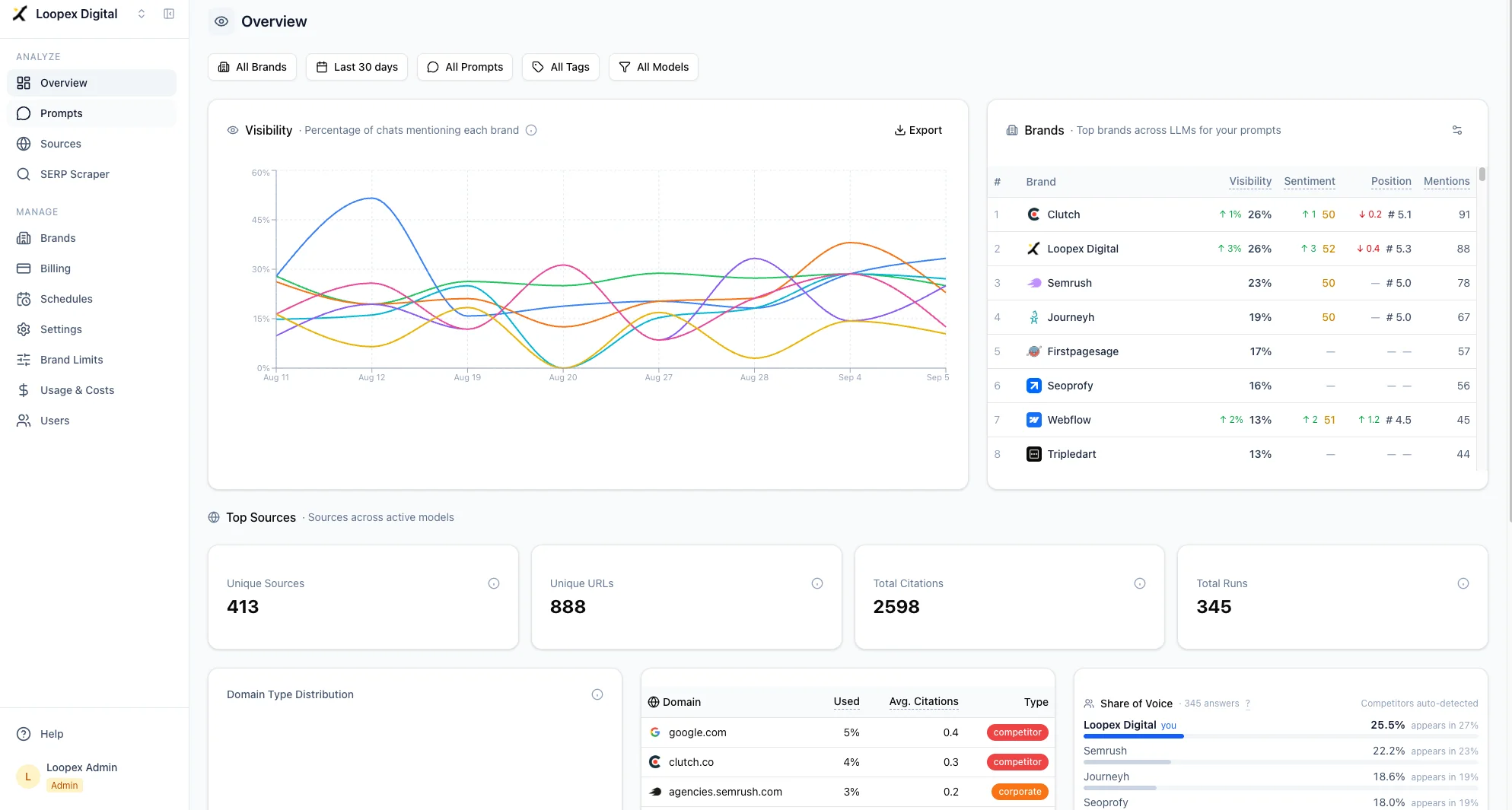
Clients get access to our tooling to follow campaign progress. Our specialists use Linkee.ai for relevant outreach prospects, BacklinkMonitoring.ai to monitor built links, and Aiveyes, our AI visibility tracker, to measure brand appearances for the prompts we track.
Helps us find relevant backlink prospects for outreach. Our team reviews quality and relevance and develops the outreach strategy to support SEO and AI search visibility.
Shows brand appearances for tracked prompts, cited sources and changes over time. Clients can follow the results while our strategists use the findings to plan improvements.
Monitors the backlinks we build and flags problems so our team can investigate promptly and work on a solution.
Ask for a clear connection between the team, the work and the results.
A useful case study explains the starting point, what changed and how the results were measured.
Client campaign data is shared where the client has permitted it.


_logo%202.svg)
★★★★★ 5.0 on Clutch · verified client reviews
"Everything is extraordinary. They really care about our success, they really care about our team, and they overdeliver on their weekly deliverables."

"We have been able to increase our organic monthly traffic from 7K to over 70K in 8 months. What I find most impressive is that they're knowledgeable about all aspects of SEO and flexible in how they work with us."

"What stood out most about them was their exceptional ability to drive tangible results. Their deep understanding of SEO, from technical to content, let them build strategies that covered all bases."



Our specialists develop expertise in the industries and business models they work with. Your strategist leads planning and account management, with content specialists and link builders supporting the agreed scope.
Every employee studies and develops through Loopex Academy. Ongoing learning helps our team maintain delivery standards, understand new strategies and apply relevant developments in SEO and AI search.
Founders Maria Harutyunyan and Vahan Poghosyan review strategy and key steps for every client. Your account combines day-to-day ownership from a strategist with continued founder involvement.
Your strategist leads the campaign. Maria and Vahan stay involved in strategy review and key decisions.

Maria has more than 10 years of SEO experience, with a focus on on-page SEO and strategy for SaaS, ecommerce and B2B businesses. Her work includes contributions to SE Ranking, Mangools and Convince & Convert.
Meet Maria →
Vahan leads Loopex’s growth, digital PR and AI search practice. He founded Linkee.ai and BacklinkMonitoring.ai, bringing SEO software development and outreach experience into the agency’s work.
Meet Vahan →We work with businesses that want SEO to become a real source of growth and conversions.
120+ Shopify and WooCommerce stores optimized for product and category revenue.
Ecommerce SEO →Feature page rankings and an organic strategy that drives trials and demos.
SaaS SEO →Pipeline-first SEO for long sales cycles and buying committees.
B2B SEO →Corporate SEO for large-scale sites, migrations and multi-market rollouts.
Enterprise SEO →Service page optimization built to turn organic traffic into booked calls.
Lead generation SEO →Search strategy for casino, betting and related software businesses.
iGaming SEO →Five connected steps give you a clear view of the work, who leads it and how progress is measured.
We discuss your products, customers, goals and current performance, and clarify what success should mean for your business.
Your strategist assesses the opportunities and sets priorities. Our founders review the strategy and key steps before delivery.
We deliver the agreed technical, content, outreach and AI SEO work, coordinating with your team where input or access is needed.
We track the agreed performance measures, including relevant traffic, conversions and brand appearances in monitored AI answers.
We explain completed work, results and next priorities. Findings feed back into the strategy so the campaign continues to develop.
Your proposal reflects your website, competition and business goals. We agree on the work, priorities and monthly budget before starting. AI SEO activities can form part of the plan, with specific deliverables defined in your proposal.
Work with us on a rolling 30-day basis. Your proposal explains the scope, priorities and monthly budget before you commit.
Something else on your mind? Ask us directly →
Loopex Digital is a specialist SEO and AI SEO agency that has worked with 540+ businesses since 2018. Your strategist leads the account, with founders reviewing the strategy and key steps. Our work combines technical SEO, content, link building and digital PR, supported by our own tools. Explore our client case studies and the work behind their results.
Your plan can include technical SEO, content strategy and creation, link building, digital PR and AI search optimization. We research your business, website and competitors before agreeing on priorities. Your proposal specifies the services, deliverables and budget, so you can see what your engagement covers.
Look for experience with businesses like yours, clear deliverables and a team you can speak to directly. Ask for case studies with timeframes and data sources, and distinguish traffic growth from leads or revenue. At Loopex, a strategist leads your account, founders review the strategy and your proposal explains the work and pricing.
An AI SEO agency helps businesses improve their visibility in AI-generated answers. Traditional SEO focuses on organic search visibility and website performance. Our AI SEO work adds prompt tracking, citation research, content improvements and outreach to relevant sources. We use these alongside technical SEO, useful content and authority building.
We research the questions buyers ask, examine cited sources and improve content and coverage to support your visibility. For Workyard, AI citation building and AI content optimization led to appearances in answers about “construction management software” on ChatGPT and Claude within three months. AI platforms choose their own answers, so a particular recommendation or position cannot be guaranteed.
Our published Workyard case study reports a 1,839% increase in organic clicks over 21 months through link building and digital PR. A separate AI search campaign achieved visibility on ChatGPT and Claude within three months. Across our client campaigns, we have generated a lifetime total of $1.2 billion in revenue attributable to our SEO work. Explore the Workyard results.
We agree on campaign goals before work begins. SEO reporting can cover search visibility, organic traffic and the leads, sales or sign-ups tracked on your website. Aiveyes, our AI visibility tracker, measures how often your brand appears for monitored prompts and shows mentions, reported position, cited sources and changes over time. You can compare brands and filter results by model and date. These AI metrics describe the monitored answers; they are separate from website conversions.
Our SEO engagements start at $1,500 per month. The scope depends on your website, competition and goals. Selected AI SEO activities can be included within the agreed budget, with the allocation and deliverables outlined in your proposal. Broader campaigns are priced according to the work required.
Timing depends on your starting visibility, competition, website condition and the work involved. Workyard’s published SEO case recorded substantial traffic growth in the fourth month, with the reported 1,839% organic-click increase measured over 21 months. Its separate AI campaign achieved visibility within three months. These are campaign examples; we assess your situation before discussing an expected timeline.
Yes. We research the products, customers and buying process for each business. Ecommerce work can focus on product and collection pages, while SaaS and B2B campaigns may prioritize feature, service and comparison pages. Our case studies include Q for Quinn, Workyard and Functionize. See examples from different business models.
Your strategist leads campaign planning and account management, keeping the work focused on your business goals. Loopex Digital’s founders review the strategy and key steps and stay involved with every client. We agree on where your team will provide business knowledge, feedback, approvals or implementation support.
We work on a rolling 30-day basis. Your proposal sets out the scope, budget and engagement terms before work starts. This gives you a clear understanding of the commitment and the work planned for your account.
 Agencies
We ranked 11 SaaS SEO agencies on verified results, Clutch reviews, AI search and price.
 Agencies
Our top 10 picks for the largest SEO companies in the world, and who each one is for.
 Agencies
Seven companies offering high-quality SEO without enterprise retainers.
 Link building
Ten tried-and-true tactics, ranked by how much they actually move rankings.
 Agencies
Eight agencies ranked on verifiable B2B results, reviews and AI-search capability.
 Agencies
Agencies proven on large, complex sites, ranked on results, process and reporting.
Tell us about your website and business goals. We’ll review your search visibility, compare your competitors and prepare a proposal with priorities, scope and pricing.
Free proposal
Tell us your website. We'll send a plan with what to fix, the results to expect and the cost.